

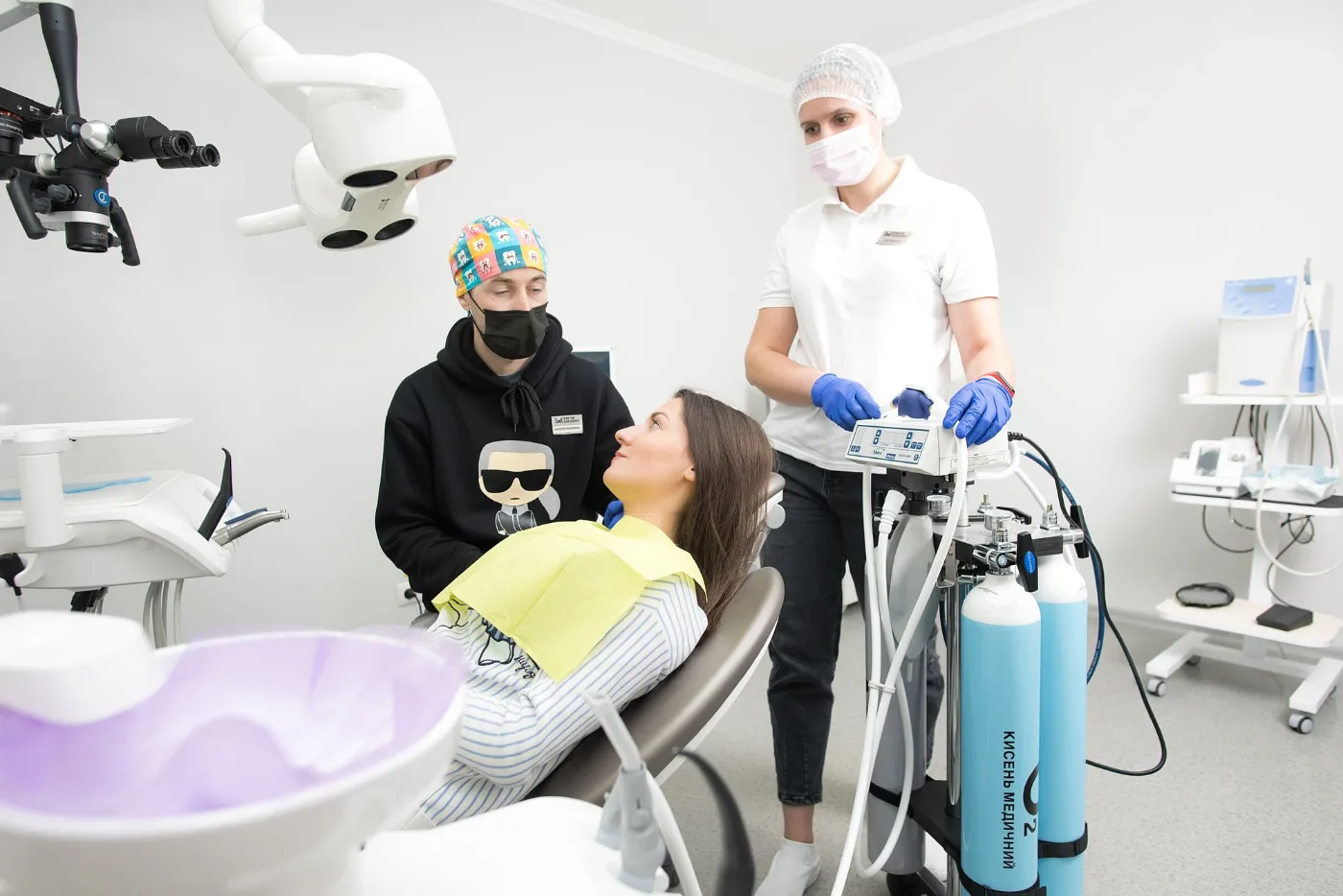
Pain-free dentistry
Calm treatments, for children and adults
If fear or anxiety has kept you away from the dentist, there are options to make treatment comfortable.
Computer-assisted anesthesia
A device delivers the anesthetic slowly and steadily, which reduces the discomfort of the injection.
Conscious sedation with nitrous oxide
Breathed in through a nasal mask. The patient stays awake and calm, and the effect wears off a few minutes after finishing. Ideal for mild fear or anxiety.
Deep or intravenous sedation
The medication goes into a vein and the patient falls asleep, with an anesthesiologist throughout the procedure. For severe anxiety, children who cannot cooperate or patients with disabilities.
Vital-sign monitoring
The patient's vital signs are continuously monitored throughout sedation, from start to finish.
What a treatment under sedation looks like
- 1.An assessment to decide whether sedation is the right option
- 2.Instructions to prepare for the day of the appointment
- 3.Treatment with an anesthesiologist and continuous monitoring
- 4.Recovery at the clinic, with follow-up
Patient guides
Before a sedation appointment
- 01
For intravenous sedation, the anesthesiologist will tell you the exact fasting hours. Do not eat or drink before that time.
- 02
Come with an adult who can stay with you.
- 03
Tell us about your medications, allergies and conditions, even minor ones.
- 04
Wear comfortable clothes.
- 05
After intravenous sedation, rest for the remainder of the day and do not drive.
Frequently asked questions
Two: conscious sedation with nitrous oxide, inhaled through a nasal mask, and deep or intravenous sedation, with an anesthesiologist. Which one suits you is decided at the consultation.
Is sedation right for you?
Tell us about your case and we will tell you which option suits you: nitrous oxide or intravenous sedation.