
Braces, self-ligating, Flow Jac® or Invisalign®: how to choose your orthodontics
Straightening your teeth no longer has a single answer. We explain how each system works, its advantages and what to consider so you can choose calmly.
By the Ponce Odontología team · · 4 min read
A few years ago, orthodontics meant metal braces. Today there are several ways to straighten teeth, and each one suits certain cases and lifestyles better. That variety is good news, but it also raises questions: which is best, which shows less, which one is right for me?
In this article we go over the four options we work with at Ponce Odontología: conventional orthodontics, self-ligating braces, Flow Jac® and Invisalign® aligners. The goal is not to sell you one of them, but to help you arrive at your consultation knowing what to ask.
First: what orthodontics corrects
Orthodontics is not only about looks. It corrects the position of the teeth and the way the jaws close. Some of the most common problems are:
- Crowded or overlapping teeth, which are harder to clean and more prone to cavities and gum problems.
- Gaps between teeth.
- Bites that do not close properly: open, crossed or too deep.
- Teeth that wear unevenly because chewing forces are not well distributed.
So beyond how the appliance looks, what matters is that the system can correct your specific case.
The four options, one by one
1. Conventional orthodontics
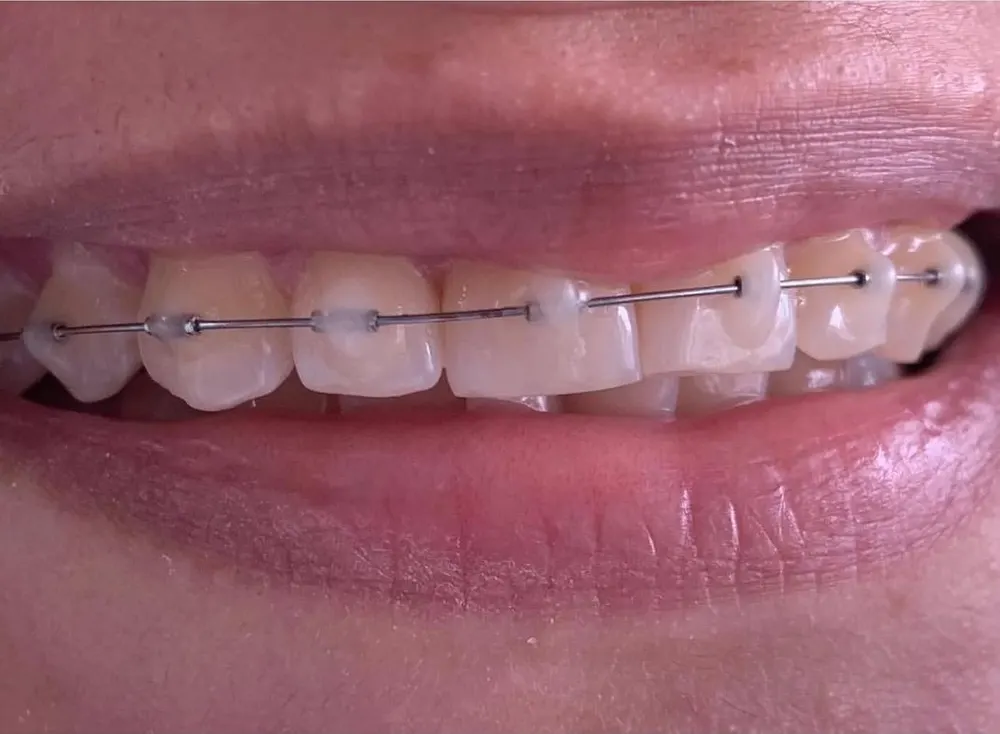
These are classic braces: brackets bonded to each tooth, joined by an archwire held in place with elastic ties. At each check-up the orthodontist adjusts the wire and changes the ties.
- Advantages: the most versatile option, suited to simple and complex cases, and usually the lowest in cost.
- Keep in mind: it is visible, and the ties collect plaque, so hygiene takes more care.
2. Self-ligating braces
They work on the same principle, but each bracket has a small clip that holds the archwire by itself. No elastic ties are needed.
- Advantages: less friction between wire and bracket, quicker check-ups and easier cleaning without ties.
- Keep in mind: it is still a fixed, visible appliance.
3. Flow Jac®
A fixed orthodontic system in which the traditional bracket is replaced by a self-ligating mini-tube under 1 mm, coated in tooth-colored resin. It works with light, sequential forces, and check-ups need no elastic ties.
- Advantages: it shows very little and, without ties, collects less plaque and is easier to clean.
- Keep in mind: it is fixed and, as with any system, whether it suits you depends on your case.
4. Invisalign® aligners
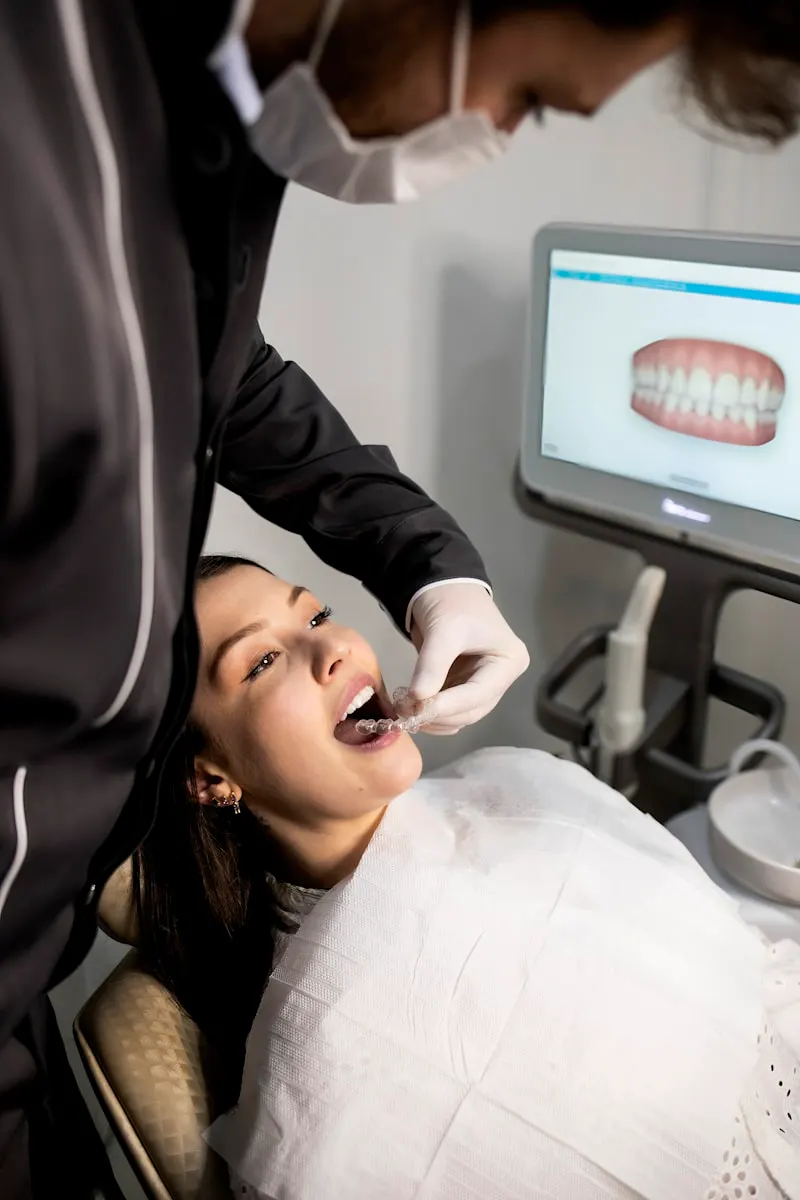
Instead of brackets, custom clear trays are used. Tooth movement is planned in 3D from the start, and you switch to a new set of aligners at regular intervals.
- Advantages: nearly invisible and removable, so you take them out to eat and brush.
- Keep in mind: they require discipline. The usual instruction is to wear them about 20 to 22 hours a day; if they spend too long out of your mouth, treatment does not progress as planned. Also, not every case is a candidate.
Which one is right for me?
There is no single best option. At the consultation several factors are considered:
- How complex your case is: some movements are achieved better with fixed appliances.
- Your routine: if you know it will be hard to keep aligners in, a fixed system may be safer.
- Appearance: how much it matters to you that it shows during treatment.
- Hygiene: how easy each system is for you to keep clean.
- Your budget: options have different costs, and it is worth having them in writing before you start.
Three common myths
“Orthodontics is only for children.” There is no age limit. What matters is having healthy gums and bone. For children, a first bite check-up around age 7 is recommended.
“Aligners work for everything.” They are a great option for many cases, but not all. That is why the consultation comes before choosing a system.
“Once the braces come off, I am done.” Teeth tend to move back. Retainers are used at the end, and following the wearing instructions is what protects the result.
What happens at the consultation
At the first visit we check your teeth and bite, take photographs and, if needed, X-rays or a digital scan. With that information we explain which options apply to your case, how long treatment might take and what each one costs, in writing and with no commitment.
This article is for information only and does not replace a consultation. Every case is different: the right treatment is decided by the specialist after examining you.
Next step
See orthodontic options